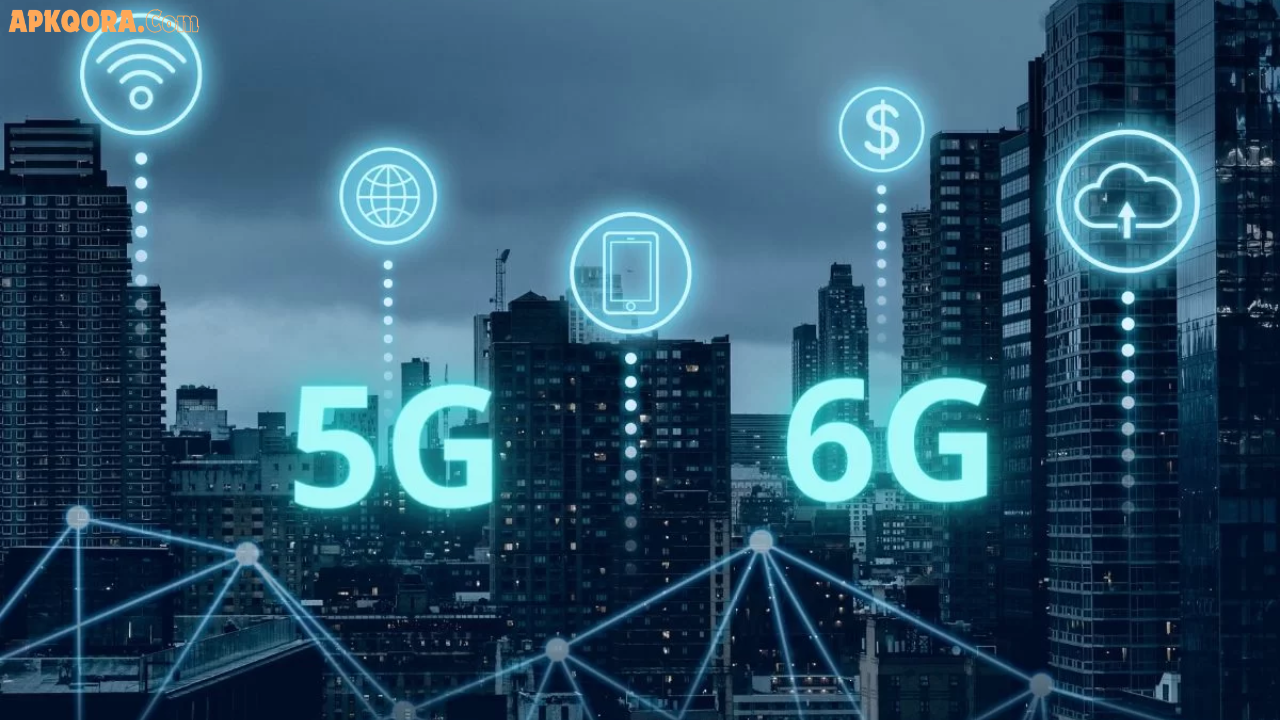

The world is still catching up with 5G — but the next revolution is already being planned. From faster speeds to AI-powered networks, the future of wireless technology is moving faster than most people realize.
In this article, you’ll learn where 5G stands today, what 5G Advanced brings to the table, and what to expect when 6G finally arrives. Whether you’re a tech enthusiast or just curious about the future, this guide breaks it all down in simple terms.
What Is 5G and Why Does It Still Matter?
5G is the fifth generation of mobile networks. It brought faster internet speeds, lower lag time, and better support for smart devices. But many people don’t realize — 5G is still being fully rolled out across the world.
According to recent industry data, global 5G population coverage reached around 60% by the end of 2025, with rapid deployments happening in markets like India, where over 500,000 5G base stations were installed within just three years.
The good news? 5G is no longer just about faster phones. It’s powering smart factories, connected vehicles, remote surgery, and real-time cloud gaming.
What Is 5G Advanced — The Bridge to 6G?
Before 6G arrives, there’s an important upgrade happening right now: 5G Advanced (also called 5G-A).
5G Advanced is considered the midpoint between today’s 5G and future 6G. It goes beyond just faster speeds by bringing intelligence, efficiency, and precision to mobile networks — including AI-powered automation, better uplink performance, energy-saving features, and precise device positioning.
Think of it as 5G getting a major software upgrade. Real-world use cases include:
- Augmented and Virtual Reality (XR)
- Industrial automation
- Satellite and private network support
- Ultra-reliable real-time communication
With 3GPP Release 18 now finalized, most major Tier 1 operators are expected to transition to standalone 5G cores and begin rolling out 5G Advanced capabilities through 2026.
What Is 6G — And When Is It Coming?
6G is the sixth generation of wireless technology. It’s not available yet — but it’s being actively researched and planned right now.
6G is often described as IMT-2030, meaning the family of mobile capabilities targeted for commercial deployment around the 2030 timeframe. Standards first, infrastructure second, and mass rollout last — the same pattern that happened with 5G.
In plain terms: 6G won’t arrive overnight. But the decisions being made today will shape what it looks like.
Key Features and Benefits of 6G
Here’s what 6G is expected to bring when it arrives:
⚡ Extremely Fast Speeds 6G promises data speeds exceeding 100 Gbps — far beyond what 5G can offer — along with ultra-low latency and novel capabilities in spectrum sharing.
🤖 Built-in AI Intelligence 6G networks are being designed to integrate AI capabilities across multiple network layers — including radio access, software, transport, and the core network — making them smarter and more automated than anything we’ve seen before.
📡 New Frequency Bands The key spectrum band for 6G is expected to be the “cmWave” range of 7–15 GHz — offering good uplink and downlink performance with manageable signal properties. Higher sub-THz frequencies may also be used in dense urban areas like stadiums.
🛰️ Satellite + Ground Integration 6G will blend traditional towers with low-earth orbit satellite networks, bringing connectivity to remote areas that 5G simply can’t reach.
🌿 Energy Efficiency Unlike previous generations, 6G is being designed with sustainability in mind — lower energy consumption per bit transmitted.
5G vs 6G: A Simple Comparison
| Feature | 5G | 6G (Expected) |
|---|---|---|
| Max Speed | ~10 Gbps | 100+ Gbps |
| Latency | ~1ms | Sub-1ms |
| AI Integration | Limited | Built-in |
| Launch Year | 2019–2020 | ~2030 |
| Satellite Support | Partial | Full |
| Energy Efficiency | Improved | Much Better |
Who Is Leading the 6G Race?
The race to 6G is truly global — and highly competitive.
China has prioritized 6G under its national development plan, directing major funding toward core technologies including terahertz spectrum, satellite communications, quantum computing, and artificial intelligence.
The United States plans to showcase 6G demonstrations at the 2028 Summer Olympics in Los Angeles, with the NTIA coordinating early trials of the emerging technology.
At MWC Barcelona 2026, Ericsson collaborated with Qualcomm, MediaTek, and Apple on 6G prototype testing — including demonstrations of physical layer improvements, latency reduction features, and multi-network spectrum sharing between 5G and simulated 6G systems.
Pros and Cons of 5G and 6G
✅ Pros
- Faster speeds enable real-time applications
- AI integration makes networks smarter
- Better support for billions of connected devices
- Global connectivity through satellite integration
- Foundation for smart cities, healthcare, and education
❌ Cons
- 5G coverage is still uneven in many regions
- 6G infrastructure will require massive investment
- Privacy and security challenges will increase
- Rural areas may still lag behind urban centers
- 6G is still years away from everyday use
Practical Tips: How to Prepare for the 5G and 6G Era
You don’t need to wait for 6G to start benefiting from next-gen connectivity. Here are some actionable steps:
- Check if your area has 5G coverage — many carriers now offer interactive coverage maps online.
- Upgrade to a 5G-compatible device if you haven’t already — most modern smartphones support it.
- Follow 3GPP release updates — this is where official 6G standards are being decided.
- Businesses should start with clean API and edge compute architecture now — this will make the transition to 6G much smoother.
- Stay updated on your local government’s spectrum policies — these directly affect when 6G reaches your region.
FAQs About 5G and 6G
Q1: Is 6G available anywhere in 2026? No. As of 2026, 6G is still in the research and standards phase. The first 6G specifications are expected from the 3GPP around 2029, with commercial services anticipated to launch around 2030.
Q2: Will 5G become obsolete when 6G launches? Not immediately. Just like 4G coexists with 5G today, both networks will run in parallel for years. 5G Advanced will remain highly relevant well into the 2030s.
Q3: What makes 6G different from 5G? The biggest difference isn’t just speed. 6G will have AI built directly into the network, support terahertz frequencies, and enable applications like real-time holographic communication and ultra-precise sensing.
Q4: Which countries are leading in 6G development? China, the US, South Korea, Japan, and several EU nations are currently the most active in 6G research, funding, and standardization efforts.
Q5: Do I need to buy a new phone for 6G? Not yet — and not for several years. Focus on maximizing your 5G experience for now. New 6G-compatible devices won’t be mainstream until around 2030–2032.
Conclusion
The journey from 5G to 6G is not a single leap — it’s a carefully planned evolution happening right now. Global mobile network spending is projected to peak around $92 billion in 2026 and 2027 before declining as 5G deployments wind down and operators begin preparing for 6G.
Whether you’re a developer, a business owner, or simply someone who loves staying informed — understanding these shifts puts you ahead of the curve.
Want to stay updated on the latest in wireless technology? Explore more tech guides on our site and keep learning as the future unfolds.